Friday, February 19, 2016

Book Review: What Doesn't Kill Us

By Jessica Steinert, Helen Nguyen, Heather Nguyen, and Hoang Phuong Vy Nguyen


Brandy Liên Worrall’s What Doesn't Kill Us chronicles her battle with a rare breast cancer and how it exposed the lasting trauma that psychologically and physically haunts her family, after the Vietnam War. Through her story, Worrall weaves in the themes of suffering and survival endured by both her parents and Agent-Orange-related cancer survivors like her. She draws parallels between their stories, by exploring the topic of chemical warfare during the Vietnam War and its enduring legacy on three generations, through her parents’ exposure to Agent Orange, her childhood epilepsy and unforeseen cancer, and the potential repercussions for her children.
Diving right in at the book’s beginning, Brandy investigates the “suffering and uncertainty” that surrounds her family, within the context of her breast cancer diagnosis. She recalls coming across an intersection during a race in Canada and not knowing which direction to take--just “standing at the divide between then--and--now” (Worrall 29). This feeling of losing control and inability to return to the past mirrors her mother’s, when her mother settled in Pennsylvania, and the “atmosphere became so foreign,” causing her to long for Vietnam (29). Like Brandy, her mother deals with her own “divide,” between her life before the war and the life she has to accept now.
The first connection Brandy makes to chemical warfare is when she dreams about the “horror" her father experienced during the Vietnam War--seeing his friends get shot, children dying, flesh in bright display (63). However, most of these dreams mirror the consequences of Agent Orange: a “bright orange-red aura with the smell of singed skin,” the “blood orange sky, struck with terror,” and the “smell [of] people burning alive” (63-64). These images resurface as she undergoes chemotherapy; she describes how the chemical taste and smell were “biting" the inside of her mouth, nose, and throat, making her wonder if “Mom and Dad had the same assault on their senses when they breathed in the Agent Orange that was so casually dropped from planes flying overhead” (64). She is also told that there is “nothing to worry about,” because the chemicals used in chemo are harmless, but unlike her parents, their  “harmless--nothing to worry about” chemical is “nothing” but a transgenerational inheritance of health issues, resulting in the suffering and uncertain dread that Brandy continuously faces in her book (64).
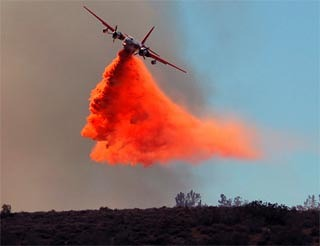
Image 1: Spraying Agent Orange defoliant on land


As Brandy fights breast cancer, other problems arise, many of which had been lurking under the surface for a long time, only to be brought to the surface by her increasing stress and pain. They include her struggles with chemotherapy, her growing disconnection with her husband Charles, her “Crazy Asian Mother” (CAM) becoming even more unbearably overprotective and critical, and her depression from losing her sense of self and the life she had. She gradually notices how her experiences intertwine with those of her family. For instance, as one of the side effects of chemotherapy, she develops acne all over her body, which prompts a memory of her Vietnamese immigrant cousin, Lung. Like Brandy, he is half-White, but has a much different story from hers: growing up, Lung was often whipped for being a “bụi đời”— an Amerasian child of a Vietnamese mother and a military/civilian father from the U.S.—and had severe chloracne due to Agent Orange. While she reflects on the different courses of their lives, she starts to realize that their veins share the same deleterious chemical.
Although Brandy has differences with her mother, the cancer unexpectedly draws them closer together as she learns more about their parallel histories. On her blog, “cancerfuckingsucks,” Brandy maintains humor and boldness, but in private she often feels sad and isolated. The theme of sadness and isolation due to loss becomes more evident and profound when she looks over old photographs of Mom and Bà Ngoại (grandmother). In hopes of a better life, Mom had to leave her mother and young son, Hieu, behind in war-ridden Vietnam and move to an unfamiliar land. With her daughter gone, Bà Ngoại was alone and overcome with grief to the point that she decided to end her life. Even though all three family members have experienced loss in different ways, this shared feeling allows them to reconnect with one another. Stories of broken families like these demonstrate the common and unspoken, post-war hardships endured across Southeast Asian generations.
Along with the themes of loss and isolation, the book also explores the enduring legacy of Agent Orange. Breast cancer was not Brandy’s first interaction with the chemical; at a young age, she had epilepsy, which her mother believed was a punishment from the gods for abandoning her loved ones. Her mother also had her own share of health problems, including several miscarriages—a common health complication among victims of Agent Orange—until giving birth to Brandy. Not only has her mother lived with the guilt of leaving home, the dioxin created personal health problems and left tangible, long-term impacts and reminders of the war, through Brandy.
As she grows closer to her mother, Brandy also develops a better understanding of her father by exploring his own experiences with the Vietnam War. She had always before viewed him as a substance-loving veteran, but she comes to realize that his addictions cover up his deeper problems. After visiting the VA hospital, her father displays a certificate in the family room. It lists a series of statements that reflect the state of war during his service in Vietnam vs in the U.S., such as, “for you it was the news; for me it was reality” (131). Comparing her wall of academic achievements to his wall of military service recognitions, Brandy reiterates the message that violence of war affects more than just the body; it pains the mind and soul, and war-related incidents can never be forgotten. Her father’s trauma is etched in his memory, and as a result, he abuses drugs to numb himself. For years, she watched her father suffer from PTSD without understanding why. However, through her own experience of loss and war-related health effects, Brandy develops a better grasp of her father’s history and is able to make sense of his life after the war.
At this point of the novel, I acknowledged that Agent Orange plays a significant role in the lives of many war-affected individuals, but it is not often discussed outside Southeast Asian communities. How would the outcomes of Brandy and her family been different if Agent Orange were part of a bigger discussion in our society and/or if the U.S. and Vietnamese governments, hospitals, legal systems, and other social institutions dealt with the health consequences?
Wrestling with her cancer-related fears and her family’s past, Brandy uses the word limpky, or “sickness inside,” to stand for more than just her cancer, but also her frustrations with her parents, husband, and herself (156). She feels a need to say goodbye to her breasts, because she is relinquishing a part of her life. To commemorate her breasts, she makes thirty plaster casts and throws a cast-decorating party, to raise money for the Canadian Cancer Society and Friends for Life. As I read this part of the book, I was surprised by her desire to have a party. Despite her anger, frustration, and hatred toward her cancer and family, she is still able to celebrate. She discusses how cancer can be so lonely, but I was impressed by her strength to not give into that loneliness and be able to find at least a moment of happiness.
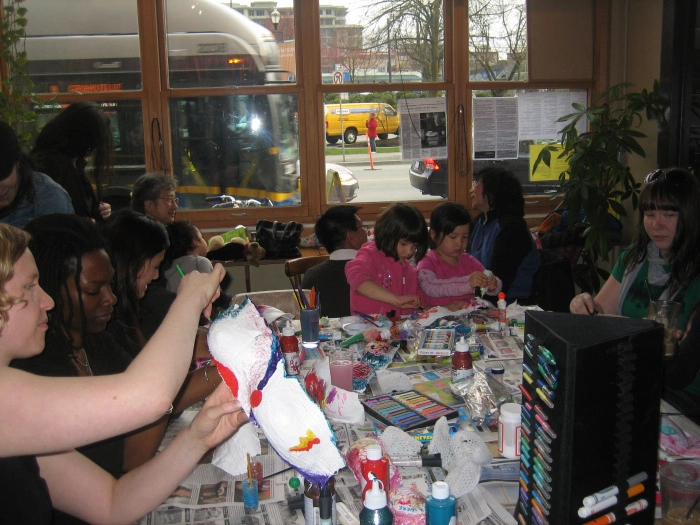

Image 2: Bringing friends and family together around a divisive disease


However, as Brandy heals from her surgery, she delves into her father’s PTSD and experiences in rehab. With no apparent improvement, her father has reached the point where his bad health has become an accepted truth, and no one cares anymore. Perhaps for the first time, Brandy empathizes with his loneliness and helplessness, realizing that she is not alone in her feelings of isolation. Therefore, she draws parallels between how cancer has victimized her and how the Vietnam War has victimized her father, enabling her to empathize with him.
Her marriage becomes another casualty. Already struggling with fear, pain, and uncertainty, Brandy is overwhelmed by her husband’s infidelity. One of the book’s most powerful moments is when she gazes at the water spilled all over the table and watches it drip away. She feels as if her life is spilling everywhere and out of control. Her heartbreak is clear when she states, “there is no chemo, radiation, or surgery for this pain. I can’t shake it. I can’t clean up this mess” (241). She cannot stand alone.
As Charles and Brandy undergo their divorce process, she fears that she can never be intimate with anyone again, feeling that he has thrown her away and seen her as “a freak,” because of her scarred body (243). Her physical scars mirror her emotional ones. At the same time, she acknowledges that an “enormous sense of helplessness” and deep “pain and suffering” drove her and her husband apart; she continues to empathize with him, but she tries to face these feelings alone, leading to her suicide attempt (247). She is confronted with another family legacy, having “inherited this curse, this diseased life,” manifested by her brother Hieu and Bà Ngoại also allegedly committing suicide and her father’s recent manic episode (247). Far from helping Brandy’s health, but coping in her own way, her mother blames Brandy for jeopardizing the health of the elders and the children, who need the second generation to be intact for their support. At this point, Brandy alone makes up the second generation for her family. They are fragmented and she has faced her own near-death experiences, and yet, they need her, despite her initial denial, in order to survive.
Beginning her “rebirth,” Brandy reclaims her self-confidence through new clothes, learning to love her new body and counteracting her previous negativity towards her scars. She decides that “it’s time to stop being the victim,” for her children’s sake (269).
Brandy finds healing in her relationship and eventual marriage with Anton, who understands her helplessness within her own body, her isolation, and her broken love, in his own struggle with a meth addiction and journey towards sobriety. He respects her scars, rather than be repulsed by them, like Charles was. They choose to have children together, aware of the intergenerational “curse” that Agent Orange has cast on their family, which claims their first son Veo, due to a fatal birth defect common for Agent Orange grandchildren. His death reminds Brandy of Matthew, who was also a potential casualty, demonstrating how each stillborn or deformed baby claimed by Agent Orange has a life--dreamed by their parents and later by their surviving siblings, who hold onto what could have been. Brandy and her family find hope in how her parents tried again, after Matthew’s death, resulting in Brandy being born. Brandy and Anton have Moxie Olivéa, her name being a blend of their cultures and names from their families, proving that there is indeed life after death and that the life that persists is rooted in those who have passed.
Reading this part of the book reminds me of my own father, the youngest of eleven children, and how he was born with a leg much smaller than the other. I recently discovered that he had a stillborn younger brother. I first assumed that this may have been caused by him being my Bà Ngoại’s twelfth birth, but I now wonder if my father’s smaller leg and his younger brother’s death are related to Agent Orange. How has Agent Orange affected my own family, and why hasn’t it been talked about before? Is there shame in being victims? I gain hope from Brandy’s strength and tenacity to survive despite the hurt, the deaths, and the odds.
Brandy concludes her memoir, by contemplating how although her parents “passed [their pain] onto [her], psychologically, medically, and emotionally,” they have also given her many blessings (342). This quote sticks with me, capturing the beautiful imperfection and survivor’s spirit of her and her family: “I learned from them what they have a hard time learning themselves: how to laugh...at everything, because really, how great, how fucked up, how wonderful and how incredible is this life we get to live” (342). She also voices her last and perhaps, most profound, parallel between surviving cancer and surviving war: “You don’t know how you will change, how you will come back, or even if you will come back...But you do know that if you survive, you will never think of life the same way again” (345). Brandy ends her memoir with the sensation of life persisting and the refusal to forget her memories with her family and her roots to Vietnam, both painful and beautiful.


Image 3: Three generations of survivors

Works Cited
Book:
Worrall, Brandy Liên. What Doesn't Kill Us. N.p.: Rabbit Fool, 2014. Print.


Images:

  1. Hynes, H. Patricia. Chemical Warfare and Agent Orange. Digital image. Pentagon Pollution, Part 3. N.p., n.d. Web. 10 Feb. 2016.
  2. Worrall, Brandy Liên. Peeps Decorating My Boobie Casts. Digital image. Snapshots. N.p., Apr. 2008. Web. 19 Feb. 2016.
  3. Worrall, Brandy Liên. One Big Happy Family!. Digital image. Snapshots. N.p., Apr. 2008. Web. 19 Feb. 2016.

Saturday, February 13, 2016

Long Vang
Brother Enemy: The War after the War
Nayan Chanda’s Brother Enemy: The War After The War A history of Indochina Since the Fall of Saigon is a comprehensive analysis of the end of a War with the United States and the aftermath that leads to an interesting Indochina war.  Chanda is able to give details from multiple sources on coming from officials in Vietnam, China and Cambodia.  As a journalist who seeks out knowledge, Chanda being in the thick of events in Indochina bravely sought out facts in the time of post-war.  Contrary to belief, the Vietnam War ended opposite of what was believed in the Domino Theory and took another strange turn. 
As Vietnam’s victory draw near Hanoi as able to “liberate” Spartlys Islands in the South China Sea from the Thieu regime.  At the same time Vietnam publicly claim the Paracel Islands that are north to the Spartly islands, interestedly enough occupied by the Chinese.  It is not strange that during the war land is contested and taken over, in this case it open up the rivalry that was already brewing between Cambodia with Vietnam and Vietnam with China.  This Indochina Struggle that was frozen by the French colonial rule and the United States intervention afterward slowly melted and was brought into perspective.  Old enemies rise again, but all sides hesitant to launch any full-scale conflict as every country, damaged, was barely coming out of another conflict.  This state of confusion is brought up entirely as allies and enemies start switching sides. 
Image 1: The location of the Spratly and Paracel Islands in the South China Sea

Something that was ironic about the whole Vietnam War was the fact that more than just the United States it was China who lost the Vietnam War, according to Chanda.  After the war ended Vietnam came out as a strong, reunified Vietnam challenging China from the south.  Chanda gives a different perspective as most believed that Vietnam and China were allies with a similar communist goal, but not in a way that China would like.  The power in Indochina came at a time when Peking was obsessed with Soviet “social imperialist”.  This gave China the fear that Moscow, one of Vietnam’s principle supplier of military hardware, would join in the mix of the power vacuum after the United States just left.  Shortly after the end of Operation Frequent Wind, the main item of foreign news in Xinhua News Agency was about the Soviet naval presence in different parts of the world, including to the south of Vietnam as a way to heighten vigilance “against the dangers of social-imperialist aggression and expansion.”  China’s chairman Mao, Zhu De, and Zhou sent were courteous enough to send a congratulatory to Hanoi, but also sent a reminder that the victory of the Vietnamese people was another demonstration of the invincibility of the people’s war.  This leads you to believe that allies in the war that fought against the United States joined together, but their alliances or ideals were fickle and far from each other’s desire. 
China maintained a stance to gloat about their power and ability to support Vietnam as it basically said, “Vietnam won the war thanks to China’s support.”  This statement was sent out as a warning as discreet as possible, because Peking fear the Soviet base facilities in Vietnam.  It seem that that the saying, “An enemy of my enemy is a friend” did not last long as that “friend” raised tension.  In July 1975, Chanda was able to asked Ngo Dien, Vietnamese diplomat in charge of the press department of the foreign Ministry whether the Soviet asked for a base in Vietnam.  In short, the Soviet did unsuccessfully pressed for military facilities as it was not revealed to Chanda until years later.  But that was only one worry over many as another one floated in the air.  It was the rise of power in Indochina, more specifically the new vacuum in Southeast Asia. 
Even as conflict was present with Vietnam, it was not known in the public’s eye as further conflict was a well-kept secret.  As the war ended with the United States it was still brewing between Vietnam and Cambodia.  Chanda cleverly titled the book as the idea of brother’s who fought together once quickly turned to enemies as China who supported Vietnam switch sides to support Cambodia.  History has a tendency to repeat itself and in this case history did repeat itself for the Vietnamese as they had to fight a war against China. 
In conclusion, Chanda portrayed an imagery of hardships and tragedy stuck onto Vietnam and its people. Vietnam faced a tough part in its history as a thousand year conflict finds itself back into current life.  In reading this book, I came to understand that history is an intricate web of information that, in how relevant every title and every word was it brought forth a feeling an investigation and classic journalism into finding the truths. The title alone, Brother Enemy: The War After the War, was able to sum up the book.   The war, which was the Vietnam War, and the war that followed referred to the Indochina war show that Vietnam was in a power vacuum. Readers are given an opportunity to judge the book by its title and grasp an understanding of a prolong war with close enemies.  Chanda expertly gives each chapters and sub-chapters sub-themes that is able to have the reader focus on that one theme.  For example, “Windows to the West” referred to seeking help from a western country, America. “East Wind Prevails” referred to Vietnam eventual request to seek help from the east, Moscow. Not only does the title provide us a summary, the title seemingly leads to the question of, “why does it happened the way it does?” This question, through various stories and illustration of the events, is indirectly answered throughout the chapter.
            What the readers gained from reading this book is a set of historical perspective and understanding of what had happened to Vietnam. The readers are able to sense the significance of every momentous event and how the countries played a role during this period of the Indochina war. In this book, multiples themes was revealed to the reader's: economic power, war, choices, death, normalization, survival, destruction and etc. But most importantly we are stuck to the theme of strength and determination. The book depicted Vietnam in a tragedy, but alongside to this tragedy, Vietnam still exist. A continuous war, starting from the war with America up until the end of the Indochina war lasted almost two decade long. Although Vietnam was economically and financially deprived, it stood against all enemies.  This goes to show how powerful a powerless country could be.
            This was a long, easy to read historical book that focused in on Indochina during the period of 1975-1985.  Nayan Chanda was able to achieve his purpose of seeking out answers and recording history right in the middle of dangers.  His ability to record the drama that unfolded in Indochina is probably the closest to the truth than any history books out there.  The ancient history that connects Vietnam, Cambodia, Laos, and China is shown through this book as the Indochina War.

Question: If Vietnam had not rally together and unified as strong as they did would the domino theory hold any substance and possibly would history have changed even greater?


Bibliography
Chanda, Nayan. Brother Enemy: The War after the War. New York: Collier, 1988. Print.
Image 1: https://en.wikipedia.org/wiki/Spratly_Islands#/media/File:Spratly_%26_Paracel_Islands.png

Brother Enemy: The War After the War

 Mai Vang
Nayan Chanda’s Brother Enemy: The War After The War A history of Indochina Since the Fall of Saigon is a comprehensive analysis of the end of a War with the United States and the aftermath that leads to an interesting Indochina war.  Chanda is an author who had spent much of his time in  what we now call our history of the world. His interest in Southeast Asia has allowed his readers to fully understand the history of Vietnam and the events that led to one another. Chanda is able to provide illustrative perspective of historical events from multiple primary sources and secondary sources through officials in Vietnam, China and Cambodia, making his book one of the most credible historical book.  As a journalist who seeks out knowledge, Chanda being in the thick of events in Indochina, bravely sought out facts in the time of post-war and present the readers with anew perspective of Vietnam through his narratives.

Window to the West
The Vietnam War has ended and was victorious over their defeat of America. However, their victory resulted in casualties throughout all aspect of Vietnam. As the Americans left in 1975, they returned to Vietnam two years after, in 1977, to settle affairs. By this time, Jimmy Carter had come into office and sent Ambassador Leonard Woodcock to Vietnam to resolve the issue of MIA soldiers. When Woodcock arrived to Vietnam, he saw what his people had done. The destruction of Vietnam by the Americans resulted in craters from the bombing, disruptions to the livelihood of the people and the wounds inflicted upon the innocents. Through the observation that Chanda received from Woodcock, the Vietnamese was seen as respected people. They welcomed Woodcock and gave him no imagery of hatred. In his time in Vietnam, Woodcock had accomplished his goals in returning the MIA back to their homeland. In return, America would help Vietnam in repairing the destruction caused by the war. MIA, Normalization, and economic contributions was the start of better relations with the US but the US later made it an impossible task as the loss would be greater than the profit in helping Vietnam.
“Hanoi was jubilant at having won the war, but it was more concerned about winning the peace.” In “Windows to the West,” Chanda portrayed Vietnam as a country who knew what it wanted and took immediate actions to accomplish it. Vietnam focused on other countries to “explore possibilities of trade and financial relations.” United States was one of the countries they looked at. .
America’s agreement to friendly relation with Vietnam was for profit but America has shown itself as a country who avoids loss. Their promise to aid Vietnam was constantly pushed aside as they tried to avoid the topic. Vietnam, on the other hand, pushed for the aid from the US as it was their hope in repairing Vietnam.
Throughout this chapter, Chanda illustrated where Vietnam stood after the war. The promise of aid from the US devastated Vietnam as their hope to rebuild themselves was squashed by the important figures of America whose words were meaningless. What was emphasized a lot in this chapter was Vietnam’s hope for aid from America. Why America? An obvious reason was that America was the war enemy. But other variables that could have been taken into consideration was what America stood for at the moment in time. Although America had lost the war, America was still a leading country in world power and economic power.  I believe that these characteristic that connote what America was played a role why Vietnam was so persistent in seeking aid. As the title suggest, the window connote a barrier and the west referred to the US. Vietnam saw an opportunity with the US, but there was an obstacle that prevented the relation to continue.

East Winds Prevail
The Soviet Union and Vietnam has an intertwined relationship that dated back to the early 20th century. Both countries had something in common. It was the place where Ho Chi Minh had lived. While living in Paris, he had come to embrace the idea of communism. In his later years, he taught at a University in Moscow that led him into the circle of the soviet leaders such as Joseph Stalin. Their belief in communism directed Ho Chi Minh into a path where he would later become the Communist International official. His returned to Vietnam resulted in the takeover of Hanoi. Communism had reached Vietnam and a war came shortly after. During the war, Vietnam received most of its supplies from the Soviet Union. The Soviet Union, on the other hand, had help but refrained themselves from giving the communist vietnamese weapons that would cause collateral damage to the US because they did not want to create tension with the US. Although the Soviet Union wanted to stay neutral, they felt that it was better to help Vietnam because they did not want America’s power to grow. Their intention later became known at the end of the war that their help came with a price.
Aside from the Soviets, Vietnam also had relations with China. At some point after the War, Vietnam had to decide whose hand they should hold. They had hope to have a balance relationship but with the results of the war, choosing sides with the Soviets was a better chance at rebuilding themselves. In 1975, Moscow had signed the first “postwar aid agreement” with the Vietnamese.  This agreement would soon allow Vietnam to know that their future was at the hands of the Soviets.
Vietnam had approached for open relationship with other countries through trades and would take any opportunities that was open. They wanted to create their own independence away from the Soviets by deciding what groups they want to belong to such as the International Monetary Fund(IMF). In trying to make their country better, they were stuck with the Soviets. The Soviets did not like the direction in which the Vietnamese was going as it may later be a disadvantage to them. They wanted the Vietnamese to join the COMECON  and IBEC but was refused. Tension grew and as they turned away from the Vietnamese, the Vietnamese found themselves in a disastrous condition. Their hopes in receiving help from the west was of no luck and the east was not making it any better. Relying on the east, Moscow or the Soviets, was their only choice. To make better relations with the East, they joined the COMECON and IBEC and strengthen military power with the Soviets.
Through this chapter, we saw that the victory for independence was an understatement. They found themselves back at where they started. To gain recognition from third world countries was accomplished but it did not lead to a better Vietnam. This victory resulted in the desperation of the communist Vietnamese as they tried everything to succeed without being under the control of another country. But as it turned out, the East controlled their success at rebuilding their nation and so, the east wind prevails.

Calm before the storm.
Vietnam, Cambodia, Soviet Bloc diplomat Gyori, and Press officer Nam was introduced to tell us the horror Vietnam endured after the war. The fight with America was over, but it's fight with its brother country, Cambodia, was just beginning. The Khmer Rouge had started an act of terror within Vietnam through massacres, killing hundreds of Vietnamese civilians. Nam's role in this time was that without consent, he showed Gyori the horror that was going on, but being kept under the table by the Vietnamese. After showing the scenes to Gyori, his stuff was confiscated. In my opinion, this showed that Vietnam was not yet ready for another fight, as there were no strategies yet to win the battles. If the officials were to make this known, Vietnam would be outrage and have desires for another war they could not handle. Cambodia on the other hand, was ready for a fight. The holocaust in Vietnam was an act to show China what Cambodia was capable of.
Through strategic planning, Vietnam lured the Khmer Rouge into its land and ambushed the group. Though Cambodia suffered a huge loss, they did not back down. In desperation, Vietnam pleaded to China for help in hope of separating China from Cambodia. China denied its help to Vietnam. According to Cambodia, the attacks was the result of Vietnam "acts of aggression, subversion, and sabotage." Vietnam's link to China, Cambodia, and the Soviet Union became clearer when China supported Cambodia by providing supplies to the armed force. This made Vietnam's relationship with the Soviets stronger. As tension was growing, the Lao Prince requested a meeting with Cambodia in hope of solving the problem with Vietnam. This meeting did not have a huge impact as Vietnam, shortly thereafter, invaded and attacked Cambodia. The third Indochina war has begun. In trying to keep this fight in the dark, Cambodia openly revealed to the world what has been going on. This was to make Vietnam look bad and lose its supporters. "The hero of yesterday's anti-imperialist fight was now cast in the role of a mini-imperialist." To prove that they were not the bad one, they revealed that they had received three hundred thousand refugees fleeing from Cambodia.
Throughout this chapter, we saw a fight within brother countries. Vietnam and Cambodia was at the center of attention. China and Laos, brother countries to both countries was drawn into this conflict, eventually making them choose sides. But, we saw that as China did refused Vietnam and aid Cambodia, its goal was not to help escalate the war but neutralize the tension. Laos, on the other hand, involved themselves to stop the unnecessary killing of the brother nations.  From what I have read, I saw that Vietnam just want to be left alone and build their independence but along its border, Cambodia was there and killing its people. Vietnam, again, was left in a situation where it doesn’t want to be.  

The Road to War
In March  of 1978, Vietnam made a decision that would put them in the center of attention with China. On the morning of March 24, Vietnam attacked Cholon, a city in Vietnam, populated with thousands of Chinese. The purpose of this attack was to stop China’s economic control over Vietnam. This attack led China to stop all projects in aiding Vietnam. The result  left Vietnam in an economic crisis, but at the same time, allowed them to freely join the COMECON that was requested by their Soviet allies. Shortly before the attack, China had pass a policy in allowing any oversea chinese nationals to return to their homeland. When the Chinese in Vietnam seeked China’s help, China sent ships to retrieve the people but was left unsuccessful as Vietnam did not allow them to dock on their ports. Altogether, China abandoned their plan to save the people. On the anniversary of the Victory of the Vietnam War, China launched an attack on Vietnam. From there, Vietnam was faced with fighting two of its neighboring brother countries, China and Cambodia. The Chinese in Vietnam was left hopeless and in the eyes of Vietnam, the Chinese were seen as unloyal. Vietnam decided to take all the possessions of the Chinese and sent them out to sea where they could seek refuge in another land. During this process, thousands of people died.
While Vietnam was  fighting two countries, Pol Pot from Cambodia began eliminating anyone who had relations with Vietnam or was thought as traitors. The massacres happened in the Eastern Zone of Cambodia. Those in the Eastern Zone were seen as “Khmer bodies with Vietnamese minds.” The killings of the Vietnamese companions led them to have “fire power” as the main source of winning this war they were in. But with a turn of luck, the Cambodians that were fleeing from Pol Pot’s massacres joined Vietnam to overturn Pol Pot and their followers. Vietnam now had hundreds of thousands of Cambodian willing to help them stop this war.
The war with China gave an opportunity for the Soviets. With China’s preparation to attack Vietnam, Vietnam looked toward India for aid but was refused as they did not have the resources to help Vietnam. Once again, they turn toward the Soviet Union. The Soviet Union and Vietnam revived their friendship by signing a treaty. The Soviet Union helped aid Vietnam through military support.
Throughout this chapter, we saw that Vietnam have no chance of becoming independent nor reviving themselves. As friends turned enemy was happening to Vietnam, Vietnam turned to their old enemies for help, America. Thus, “The Road to War” had begun.

Yankee come home
Normalization between Vietnam and America was something both wanted. But the offers each group requested was not something they would want to give. In this chapter, we are illustrated with a moment in history where two people come together to make a decision whether normalization could go on. Vietnam later agreed to stop pursuing Americans aid in building the country. This allowed America to have ties with Vietnam. However, in mid 1978, America had decided to established diplomatic relations with China. With China and America settling their normalization, America had to choose if they would break relation with Taiwan, an enemy of China. America was hesitant to do so. While this was going, Holbrooke pursued the issue of normalization with Vietnam again. America placed themselves in a position where their extension in normalization would affect their ties with the countries.
America’s role during this time was for their benefits. Establishing ties with Vietnam allowed them to access information that was happening in the country. It also allowed them to retrieve the MIA during the war. The term “Yankee Come Home” meant more than bringing back the Americans to America, it meant that a friendly relationship had been established with Vietnam.

Overall, Chanda portrayed an image that tragedy was stuck onto Vietnam like a shadow. In every direction Vietnam seeks, a dark history followed. In reading this book, I saw that it was amazing, as well as interesting, in how relevant every title and every word was. The title alone, Brother Enemy: The War After the War, summed up the book. Brother enemy are its neighboring countries who eventually turned into Vietnam’s enemy. The war after the war referred to the Indochina war that followed the Vietnam’s war. With this title, even before the readers had a chance to read the book, they can already grasp what this book revolves around. The titles of the chapters, likewise, summed up the chapters in a few word. After reading the chapter, we are struck with “enlightenment” of what the title meant. For example, “Windows to the West” referred to seeking help from a western country, America. “East Wind Prevails” referred to Vietnam eventual request to seek help from the east, Moscow. Not only does the title provide us a summary, the title seemingly leads to the question of, “why does it happened the way it does?” This question, through various stories and illustration of the events, is indirectly answered throughout the chapter.
What the readers gained from reading this book is a set of historical perspective and understanding of what had happened to Vietnam. The readers are able to sense the significance of every momentous  event and how the countries played a role during this period of the Indochina war. In this book, multiple themes was revealed to the reader's: economic power, war, choices, death, normalization , survival, destruction and etc. But most importantly we are stuck to the the theme of strength and determination. The book depicted Vietnam in a tragedy, but alongside to this tragedy, Vietnam still exist. A continuous war, starting from the war with America up until the end of the Indochina war lasted almost two decade long. Although Vietnam was economically and financially deprived, it stood against all enemies.  This goes to show how powerful a powerless country could be.
This was an long, easy to read historical book that achieved its purpose in wanting the readers to read more and become more curious about the war and how things fell into place. The ancient history that connects Vietnam, Cambodia, Laos, and China is shown through this book as the Indochina War.

Question: If the Indochina War had continued, would there still be a Vietnam?

Although we are presented with a book full of history, history is not limited. History goes beyond our knowledge and through every person that lived through time.

Chanda, Nayan. Brother Enemy: The War after the War. New York: Collier, 1988. Print.

Sunday, January 31, 2016

George J. Veith - Black April: The Fall of South Vietnam 1973-75

By Christina Langbehn, Adam Severe and Miggy Cruz

George Veith’s Black April: The Fall of South Vietnam 1973-75 details the political, economic, and military factors that influenced the fall of South Vietnam in 1975 to the Northern Vietnamese communists. Veith includes the lack of US aid for the South Vietnamese, the shortage of intelligence the South was able to collect about the North Vietnamese military action, and the shortcomings of the South Vietnamese leadership that prevented them from properly preparing for defense against the North Vietnamese. Contrary to popular media portrayals, the South was not just a “puppet government” of the US who was completely helpless to defend themselves. They had many brilliant generals whose tactical ability won them many victories against the North, even with minimal supplies and military intel. Veith aims here to redeem the collective opinion of ARVN soldiers as weak and cowardly.


The Paris Peace Accords on January 27, 1973 marked the rapid decline of South Vietnam’s ability to resist the North. America’s withdrawal of troops and subsequent cuts in financial aid for the South eventually had catastrophic consequences. Although Nixon and Ford privately promised President Thieu more financial aid and military supplies, they were unable to persuade Congress to pass the bills that would fulfill those promises. While Congress made counter proposals of less aid, they were rejected. Without US aid, the South was unable to provide their troops with proper munitions and intelligence to fight back against the North. Additionally, Northern propaganda presented a smokescreen to the world of only seeking to economically rebuild, while secretly mapping out battle plans to conquer the South. This painted the South as the villain who sought only war, since President Thieu seemed to be constantly clamoring for more military supplies from the US.

Despite a lot of blame being laid on US shoulders, perhaps the most crippling setback South Vietnam faced was the general incompetence of its leader, President Thieu. As the battles raged between 1973, when North Vietnam began its active military campaign in the South, to 1975 when Saigon fell into Communist control, Thieu faced rapidly declining morale of troops and loss of faith from the people. His poor decisions set off a chain reaction that led to the fall of South Vietnam. He was unwilling to recognize that the anti-war mood in Congress would prevent much US aid from realistically coming. He also declined to withdraw into a smaller area of South Vietnam that would have been more reasonably defended by the resources he had readily available until the situation was imminently dire. When he finally agreed to cede territory to the North, his direct control over military action impeded his generals from effectively planning a course of plausible action. His tight control in battle plans were of great detriment to the fate of South Vietnam. In contrast, Defense Minister Vo Nguyen Giap of North Vietnam frequently deferred to his general’s opinions on military action to be taken, relying on their ability to make accurate field decisions.

With the loss of several major battles and the control of several key cities, many in South Vietnam began to panic. Its armies were scattered on too many battlefronts and without effective communication, chaos erupted. Despite the obvious decline of military morale, the South Vietnamese did not give up without a fight. In the battle for Phan Rang, a major blocking position for the Army of the Republic of Vietnam (ARVN), the ARVN regrouped and tried to devise a plan to slow down the advance of the People’s Army of Vietnam (PAVN). It seemed that the South would be able to hold the city, but the fear felt by the ARVN of the imminent takeover by the Communist North prompted them to make a costly mistake. The Airborne, ordered to destroy the bridges leading to the city, were unable to do so, which caused the PAVN to advance and take over not only Phan Rang, but also the Thanh Son airbase. After hearing new about Phan Rang and the airbase, Defense Minister Giap ordered the PAVN to attack Saigon as soon as possible. Miles outside Saigon, the battle for the city of Xuan Loc began. The South called one last time to the US for aid, but received no response. The loss at Xuan Loc proved to be the determining factor that would secure the victory of the North. President Thieu finally resigned, and General Duong Van Minh was appointed the new leader. Minh was appointed with the thought that the North would at least be willing to speak with him as a final attempt for a ceasefire. In the end, the North entered the Independence Palace, located at the heart of Saigon, and called for a surrender from the South.


Veith’s research reveals that the fall of South Vietnam into the hands of the Communist North was not simply due to the weakness and cowardice of its soldiers, as is often presented. There were many factors that overwhelmed the ARVN troops and led to the success of the PAVN. Some factors were the lack of US aid after the 1973 Paris Peace Accords, the ineffective leadership of President Thieu, the strategically placed spies within the ARVN that supplied the North with invaluable military intel, and the negative effect on ARVN soldiers of fighting in battlefields where loved ones were at risk. It was the cumulation of these factors that led to the ultimate defeat of South Vietnam. Additionally, Vieth tends to lay a lot of blame on the lack of the US to provide aid to its supposed ally in the “war on Communism”. This last factor is perhaps presented out of proportion to its actual relevance in the outcome of the war. Veith seems to be apologizing on behalf of the US for its failure to adequately support its ally despite repeated promises of future aid.

In our opinion, however, too much blame was laid on the US. The mistakes made by President Thieu contributed most to the fall of South Vietnam. Even if Congress approved the proposed aid requested for South Vietnam, it might have only prolonged the inevitable outcome of the war. The poor decisions made by Thieu may have wasted such aid. Our point is that there were too many variables to be certain that US aid was the determining factor that doomed South Vietnam to lose the war. Nonetheless, this is only one interpretation based on the information provided in “Black April”. Veith said it best: “Unfortunately, history does not offer “do-overs,” only perspective” (499). As such, we can only wonder how different factors might have changed the outcome of the war.

Sources:
Veith, George J. Black April: The Fall of South Vietnam, 1973-75. New York: Encounter, 2012. Print.


Saturday, January 30, 2016

Swallows Who Bring the Spring - Moving Beyond Human-Made Borders


Radicals on the Road: Internationalism, Orientalism, and Feminism during the Vietnam Era
by Judy Tzu-Chun Wu
Book Review by Heather Nguyen and Tiffany Monica Louie


In Radicals on the Road, Judy Tzu-Chun Wu spotlights international activists during the Vietnam War era, who challenged U.S. imperialism and shaped “identity-based liberation movements” and U.S. “international diplomacy,” refined by their complex and intersecting ethnic, racial, gender, and religious backgrounds (Wu, 2013, p. 8). Together, their identities complemented each other, expanding the accessibility of their anti-war messages for the sake of Southeast Asian peoples. The narratives of these activists throughout Asia and how they proliferated them in America influenced the nation’s political consciousness to question government propaganda and drove the progress of anti-war activism. They were “internationalists,” concerning themselves with the ironic violence of American “white-saviorism,” and practiced “radical orientalism” that sought the decolonization of the East from the West, which proliferated its racist inclinations through imperialism, in the name of anti-communism (Wu, 2013, p. 5).  
Radicals on the Road is a crucial read for those who seek to look beyond the colonial perspective of Southeast Asia and who want a deeper understanding of how racial, ethnic, religious, and gender relations forged formidable bonds among activists, during the anti-war and Civil Rights movements and political turmoil spanning from the 1950s to the 1970s--a time that is often told to emphasize the divisions of Black and White, rather than the inspiring collaboration between international and interracial communities.
Wu begins her discussion of these bold international activists, by asserting the political significance of a man difficult to even find on Google. Bob S. Browne has been overlooked in historical retellings of the Civil Rights Movement, Cold War, and Vietnam War, despite his having connections with Martin Luther King Jr. and his being a powerful proponent of organizations leading the Black Power and anti-war efforts. His invisibility may be partially caused by the fact that he devoted his activism to amplifying Vietnamese voices and forged “personal and political partnerships with Vietnamese individuals”--efforts no longer deemed high-priority in a post-Vietnam-War U.S. (Wu, 2013, p. 17). The Southeast Asian community continues to be unseen and unheard in many political spaces today, easily lumped into the painful stereotype of the Asian model minority, without the prominent distinction of their homeland waging war with the U.S. to put their cultures and presences on the U.S. public radar. As their political importance diminishes, so does the recognition of Browne’s efforts to increase awareness about their narratives. His story has been overshadowed by the stories of other Black activists’, whose speeches and writings may more easily fit in the box of Black struggle against White supremacy, omitting the more broadly interracial bonds that were seen as major assets in the anti-war movement.          
Image 1: Robert S. Browne  
                                                                      
It is then not a surprise that from the beginning of his documented narrative, Browne suffered from systemic silencing. Despite being considered one of W. E. B. Dubois’s “talented tenth,” having graduated from University of Illinois at Urbana-Champaign and University of Chicago, and having enjoyed an “appallingly bourgeois” life, Browne was not exempt from anti-Black racism of his time (Wu, 2013, p. 20). He became exasperated and disillusioned by America’s deeply entrenched racism that deprived him of a successful career, caused “routine humiliations required by the racial status quo,” and led to his arrest and temporary imprisonment for a mere traffic stop (Wu, 2013, p. 25). His story mirrors those of many Black folks today, continually suffering from police brutality committed without justice; the school-to-prison pipeline; food insecurity; multi-generational poverty; and the degradation of their lives and struggle. With the Civil Rights Movement not yet gaining storm and without access to a movement like Black Lives Matter, Browne instead looked outside the U.S. to investigate the international reach of White American racism. The “black press [had] fostered [within him] a broad sense of racial and anticolonial consciousness,” leading to his wide travels across Africa, Europe, and the Middle East and his deepened appreciation for international partnerships and decolonizing nations (Wu, 2013, p. 27).
To his surprise, his Black identity soon became treasured by the nation that had and continues to insinuate that Black lives do not matter, because the nation’s history of violent anti-Black racism was being capitalized upon by the U.S.’s Cold War enemies, as a caveat to any nations of non-white people who may be seduced by the U.S.’s hypocritical claims of being the land of opportunity and freedom. In strategic retaliation, the U.S. government used Black Americans to be living propaganda abroad to convince newly formed nations, like Thailand and Cambodia, of the supposed superiority of U.S. democratic government and capitalist society. These African Americans included jazz musicians, like Duke Ellington, and well-educated, multi-lingual advisors, like Browne. At the time of his departure, the Civil Rights Movement had found its spark, manifested through notable actors, such as Rosa Parks, and actions, like Brown v. Board of Education. Browne entered Southeast Asia, “romanticiz[ing] Asia in the name of anticolonial and anticapitalist solidarity as a form of Afro-orientalism” (Wu, 2013, p. 41). He left with a strong affinity to the peoples he had met, determined to end U.S.’s abusive foreign policies there.
A tangent that I found intriguing was how twenty-nine African and Asian nations, including both North and South Vietnam, came together to proclaim themselves as the “Third World,” a “ ‘nonaligned’ force,” in a bold effort to gain “political leverage” in a world being forcefully divided by Cold War powers (Wu, 2013, p. 43). No doubt, they could not hold together and against the political boundaries drawn around them and resulting destruction, but I found the “historic Afro-Asian conference...in Bandung” to be an admirable, although inevitably symbolic, demonstration of interracial solidarity and agency (Wu, 2013, p. 43).
Browne dedicated his activism to creating Afro-Asian partnerships, after he witnessed how U.S. foreign policy wreaked havoc on Southeast Asian communities. He had joined the U.S. country team, which had ties to the American Embassy, U.S. Information Service, Military Assistance Advisory Group, and U.S. Operations Mission--all of which existed to prevent the “loss of Cambodia” and its neighbors, as if the nations belonged them and needed the U.S. to ensure its survival against the communist “disease” (Wu, 2013, p. 46). These agencies used this “white-savior” mentality to “demonstrate the benefits of capitalism, by investing in the transportation infrastructure, encouraging private enterprise, [and] developing the export and industrial capacity of the nation”--all of which proved to be doomed programs and badly-designed propaganda (Wu, 2013, p. 46). No team members could even speak Vietnamese, a major language in the region, and had no solid understanding of the cultural differences between them and the people they sought to “help.” The first U.S. ambassador Robert McClintock embodied the flawed ideological foundation of these agencies. He lectured Prince Norodom Sihanouk on “the dangers of Communism,” turning a deaf ear to the prince’s admirable stance of neutrality (Wu, 2013, p. 47). Deriding the Cambodians for being “primitive” and unable to handle the “sophisticated” efforts of the Marshall Plan, McClintock demonstrated how the U.S. considered Southeast Asians as pawns played for the success of one warring ideology over the other (Wu, 2013, p. 47). These U.S. agencies sought the end of communism with policies that treated the Southeast Asian peoples as mere cannon fodder.
In this context, Browne’s identity as a Black man earned him the trust of Southeast Asian peoples, who viewed him as another victim of white supremacist colonialism. Unlike many of his colleagues, he saw the humanity in the Southeast Asian peoples, secretly marrying Huoi and raising a multi-racial family with her, and speaking out against the “importation of luxury commodities” that undermined economy to create an idealistic mirage of capitalism (Wu, 2013, p. 52). However, his marriage was seen as a potential risk to USOM--“a source of embarrassment,” due to possible “objection...from a security standpoint” (Wu, 2013, p. 52). They saw more threat in his loving devotion towards his family than in the military sexual complex, promoting the prostitution of “Chinese ‘taxi’ girls” and “Japanese geishas” to U.S. officials and military who hungered for “native” women that they abandoned when they left (Wu, 2013, p. 52). He composed a report on the “rural aid projects” that failed due to “public works” being “blown up,” crops “being burned,” and teachers being “terrorized and murdered” (Wu, 2013, p. 60). The Ambassador “killed” the report because “too forcefully contradicted President Diem’s assurances” of full control (Wu, 2013, p. 60). Evidently, U.S. foreign policy in Southeast Asia perpetuated the dehumanization of its inhabitants and the systematic demolition of their economies and societies, in botched attempts to force U.S. ideals upon people, whose culture was beyond their understanding or respect.
Browne resigned and brought his family to America, seeking “a path beyond the binary politics of the Cold War and the racial hierarchies of global imperialism and domestic racism” (Wu, 2013, p. 61). His family embodies the cultural clash that was so destructive in Southeast Asia, and despite the Huoi’s “cultural isolation” and the invalidation of her Vietnamese-Chinese identity by people who could not comprehend her ethnicity, the family succeeds in staying strong together (Wu, 2013, p. 67). Most notably, Browne partners with Thich Nhat Hanh, a Buddhist monk once praised by Martin Luther King J., for his peace activism. They take advantage of the stereotypes of African American masculinity and Hanh’s “effeminate asexuality” to popularize their anti-war message in writings and speeches to both old and young activists fighting for pacifism and open dialogue, respectively (Wu, 2013, p. 65). Browne fought for Vietnamese voices to be heard, by identifying with his Vietnamese family and standing with Vietnamese Buddhists who risked their lives to expose President Diem’s tyranny.


Image 2: Martin Luther King Jr., Thich Nhat Hanh, and Robert S. Browne


Chapter 6 dives into the tensions between the traveling activists of the U.S. People's Anti-Imperialist Delegation. Even though the delegation represented the United States' radical left and admiration of socialist Asia, the individual members had different political goals and ideologies. Black Panther leader Eldridge Cleaver led this multi-racial, ethnic group of females and males and subjected the delegation members to humility and hostility, because of their race, ethnicity, and sexuality. Cleaver’s position also held harmful gender prejudices, as no female delegates could speak nor make decisions on behalf of the group (Wu, 2013, p. 166). 
The Panthers described the African American community living in “the belly of the beast," where the beast is the militaristic, racist, and imperialistic country of the United States.  African Americans have the power to break the corrupt system from the inside, but Cleaver determined that his power could also be used to reinstate hierarchies within his own community. Wu appropriately names this chapter “The Belly of the Beast,” because Cleaver created divisions and reinstated the beast within the Anti-Imperialist delegation. Cleaver’s “Letters from Prison” and his call to arms for white women to engage in revolutionary violence leads us to characterize him as someone who perceived women as sexual trophies and dismissed their capabilities as activists.  He saw white women as disposable tools in the movement. Moreover, he also thought women were incapable of being leaders and independent thinkers. In Vietnam, the Women’s Union invited all female delegates for a meeting and was interrupted by Cleaver as he “bursted through the door...it was appalling male behavior” (Wu, 2013, p. 175).  Cleaver’s way of describing Asian American radicals suggests the ways of traditional Orientalist thinking - describing Alex Hing and Sumi’s personalities as having no emotion is a stereotype of being expressionless, juxtaposed to the image of them as crazed model revolutionaries.
Traveling to forbidden places in Asia created personal relationships and access to information. However, how Asia and people of Asian descent are portrayed in our mainstream media and in our history textbooks is constantly being narrated and re-narrated, in line with the changing political and personal needs of the story-teller. In one narrative, the two Asian American delegates were characterized as apathetic; while in another narrative, fellow delegate members appreciated the dialogue and knowledge of Hing and Sumi. We must understand who is telling the story and their political and personal implications for narrating this specific story, in order to grasp what exactly happened at a particular moment in history.
iwc.jpg
Image 3: Delegates from Southeast Asia at the IndoChinese Women’s Conferences; Originally published in Gidra (May 1971) and republished in Asian Women’s Journal. Drawing by Cynthis Fukagai.

Before reading this book, I never knew that there was a delegation that traveled internationally to build cross-cultural relationships, as I was taught that most of the anti-war activism happened domestically in the United States. When learning about the divisiveness within the delegation, I couldn’t help but compare this to the structure of some social movements today.  While attending some of the smaller Black Lives Matter protests, where the lead organizers and chant-leaders were white, heterosexual males - I thought to myself, “WHO is/are actually out in the streets telling the story of the unarmed black teenager murdered by a police officer - the Black community that the teenager was a part of, or a white male exerting his privilege, because he thinks that they need to be ‘saved’? Even if he has learned about white male privilege and the importance of decolonizing our current system, his perception of communities of color could still be viewed through a white-savior complex lens.
In the last section, Wu concludes with examining the transnational alliance-building between Vietnamese and North American women activists at the Indochinese Women’s Conferences.  The women at these conferences symbolized building an international anti-war movement across borders, literally and figuratively. Through changing the process of global sisterhood, alliances across national, cultural, and ideological boundaries provide an opportunity to reexamine global sisterhood in two ways; the ways in which Vietnamese women initiate international partnerships and their important role as mentors for women in the west, and building a broad political coalition where rich and diverse dialogue is exchanged and debated between women of varying backgrounds (Wu, 2013, p. 193).  Because the conferences provided “a forum to air and accentuate differences along lines of ideology, race, sexuality and nationality," American women looked to the Vietnamese women for leadership and inspiration. Southeast Asian women wanted help, but they also believed they had a greater ability to inspire their American sisters (Wu, 2013, p. 196). Through testimonies of violence, survivors encouraged them to know that they have a place in stopping the war.  A quote stood out to me in particular: “the more barbaric the army, the stronger the struggle of the people” (Wu, 2013, p. 247). This quote perfectly describes the resiliency and inspiring persistency of the Indo-Chinese delegation of women survivors, in achieving a global sisterhood of anti-war and peace. We hear stories about war survivors, but we don’t hear about their rebirth in rebuilding themselves and their communities from the ground up and building coalitions across borders, across languages, across racial and ethnic lines to prevent a catastrophic war from repeating itself.  Ending the book with a chapter on stories of the Indo-Chinese delegation and how inspired and moved the female American activists felt is truly a beautiful tribute to the countless innocent Vietnamese/Southeast Asian lives that were lost.


Bibliography: 
Wu, J. T. (2013). Radicals on the Road: Internationalism, Orientalism, and Feminism during the Vietnam Era. Ithaca: Cornell University Press.  
Image 1: http://www.noeasyvictories.org/images/14_browne.jpg 
Image 2: https://s-media-cache-ak0.pinimg.com/236x/1e/fd/95/1efd95a32fcaaeb5f1f7109fd7dc7aee.jpg 
Image 3: https://blogger.googleusercontent.com/img/b/R29vZ2xl/AVvXsEjj2uTR5QsSTstdl3K5i_X53pu7q_bXFpBNULOFCEywo-glQcEKRu35GydRGSouRfa1mK9T2mFyGsbcJxMt1BjlaF_kIbKJvygsPSYYl_6-ayaq5MgdGrLH7LDW6-hrBwZwa2GUQKceC2c/s1600/iwc.jpg