Sunday, March 8, 2020

Week 10_Melody Yan_ASA 150E


This was my first ASA course, and I’m really glad I took it because it introduced me to a part of history that I would have never known. As we have discussed before in class, U.S. History rarely speaks about the Vietnam War, and when they do, it’s a very one-sided, narrow perspective. It’s ridiculous how fixated the U.S. is on the Vietnam War, especially because Vietnam had been fighting for their freedom for much longer. I honestly didn’t know much about the Indochinese Wars, and even though I knew China and France had colonized Vietnam, I didn’t understand to what extent. This class has honestly made me more aware of Southeast Asian issues and the history and political turmoil that has resulted from colonization. I realize how there is a lot of racism even in the Asian/Asian-American community, and how East Asian privilege can exist in some cases. I appreciate Professor Valverde’s transparency with everything we have discussed in class, and honestly much of the lectures and readings have completely shattered what I knew about history and politics.

The class was truly amazing and insightful, and I hope to take more courses like these! My question is, how can we provide more opportunities for people to learn about SEA communities and their histories?

Also, Professor Valverde if you’re reading this, Chloe and I love your outfits and look forward to them every class! Seriously need to take that fashion class now.
Image result for southeast asia flags

Week10_Tiffany Huynh_ASA150E

When I first enrolled in ASA150E, I had expected it to be formatted similar to how other ASA classes are. I was prepared to do my fair share of readings and essays and expected to learn a lot about Southeast Asian and Southeast Asian-American hxstories and experiences through a traditional presentation format. However, since the first day, I noticed this class was going to be much different. Professor Valverde constructed the class in a very non-traditional and unique way. I like how this class had a different structure than I was used to, because it allowed for me to learn in a different way, challenged me to think more critically, and helped knowledge be reinforced in a unique and helpful way.

Something I really liked about this class was how it took a shift and diverged from the traditional ways in which SEA hxstories, especially ones regarding the Viet Nam war, are discussed. It was a breath of fresh air to diverge and turn the focal point towards new, and less dominant, narratives. I really appreciated how we took time to consider other narratives from diverse backgrounds because not only have Vietnamese perspectives been silenced, but so many other narratives have been too, and I think it's truly important to make sure these narratives are known just as prelevantly. 

Another thing that I really appreciated was how Professor Valverde advocates for the narratives of new generations, especially generations who are getting further removed from the war, to be heard. As a Vietnamese American girl who is from a generation not directly affected by the war, I grew up struggling with my identity. I felt like my narrative wasn't valid, and I felt pressure to internalize the narratives of those in my family who came before me. However, I now realize that my narrative and experiences are apart of the very hxstories that I grew up learning about, and my story is just as essential towards striving towards growth and healing. Something I will leave this class thinking about is, how can our ethnic studies program be diversified further? How can our program, especially here at UC Davis, be encouraged to grow? Though we have made much progress, I think it's important that we continue striving to expand and always grow more as a program so that future generations can continue to thrive more.
Image result for ethnic studies uc davis

Sources:


Saturday, March 7, 2020

Week 10_ Chau Nguyen

One aspect that I thought was particularly interesting was how Professor Valverde challenged us to reconsider our connection to our Southeast Asian hxstory of trauma and war, and how we should self-reflect on what it means to continually define and distill our present and future hxstories solely based on something that happened in the past and don't directly affect us, or in similar ways, as it did to previous generations.

Learning from a variety of issues and perspectives on how the Vietnam War, Secret War, and Pathet Lao affected other communities other than the dominant ones also allowed me to understand the Southeast Asian American and Southeast Asian experience more holistically. I've never had the opportunity to learn a more progressive/different perspective on Southeast Asian experiences because I feel like so much of the discourse focuses on the retraumatization of it and focusing on its negative implications, but it was great to learn about it in its entirety. I also appreciated learning about the process in which the Vietnam War was renarrated as one that was inherently brutal and against Vietnamese people, to a contemporary narrative that valorizes soldiers and the U.S. government that saves it.

Another takeaway I've learned is really considering in what way am I going to reshift the narrative of Southeast Asians? In what ways can I help reshift the narrative while still maintaining its roots? How can challenge dominant ideologies that not only our society perpetuates, but that our very community perpetuates?


Image result for ethnic studies

http://www.riseupforstudents.org/blog/the-school-board-is-trying-to-figure-out-if-seattle-should-have-an-ethnic-studies-curriculum


Week 10_Vivianne Lee_ASA150E

     Taking Professor Valverde's class is always interesting because I learn a lot about things I did not know or think about before. When I first decided to enroll in this class, I thought that this class is mainly going to be focused on relearning the history of Vietnam war like I did in high school. However, this class was heavily focused on the different perspectives of the Vietnam war and learned the importance of preserving narratives and voices that are often silenced in today's society. Prior to taking this class, I only heard about the stories of U.S soldiers who are considered heroes and victories. However, I was able to read and analyze the different perspectives of the Vietnam war such as the north Vietnamese and the south Vietnamese side. I was also shocked to learn about the My Lai Massacre, in which the innocent and harmless South Vietnamese civilians were killed by the U.S. Armed Forces. I am excited for my final project to finally come together. From conducting a lot of research, I learned a lot about both the similarities and differences between the north and south vietnamese perspective's on the Vietnam war and how they provoked different emotions/feelings with regards to the Fall of Saigon. 
Image result for north and south vietnamese soldiers during vietnam war

https://theculturetrip.com/asia/vietnam/articles/the-best-vietnam-war-stories-by-vietnamese-authors/


Week 10_Natalie Lortz_ASA 150E

        I thought I knew what to expect when I added ASA 150E to my schedule for Winter Quarter. If I'm honest, it was not my first pick initially. However, looking back at the quarter, I was wrong about what I would learn about in this class. Yes, we went over the ancient history of the Southeast Asian countries including notable events, with a large focus on the Viet Nam War, as well as present-day issues in the Southeast Asian American communities. But, what I did not expect to learn was how to structure an art exhibit. When adding ASA 150E to my schedule, I did not realize I would discover a new interest in museum curating in addition to cultivating skills in event planning. I became passionate about not only the impact of the Viet Nam War, but the message that I am trying to convey with our exhibit, which is essentially to include more perspectives.
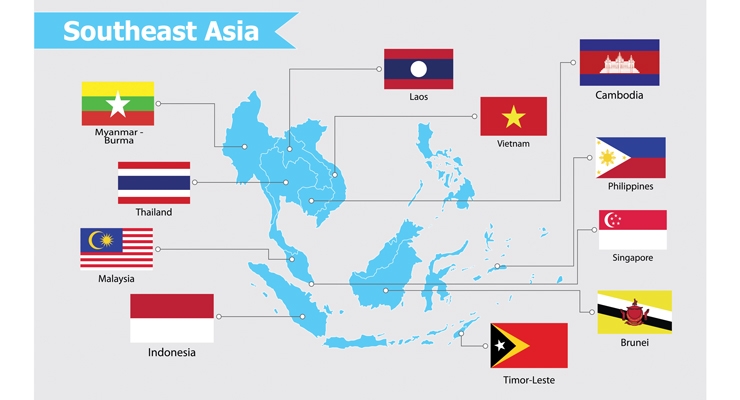
       This class taught me not only to learn about history, but to learn about as many perspectives of history as possible. It is narrow-minded to focus on one person's perspective of a situation, and it would be exponentially narrow-minded to do the same for an entire world event, such as the Viet Nam War. I'm sure other classmates will agree when I say it would be nice if we had a broad breadth of the SEA countries, rather than focus on Viet Nam. We are lucky to be taught by Professor Valverde, a resident expert on Viet Nam to say the least. But, I think students could get more out of the class if we invited guest lecturers whose expertise was similar to Professor Valverde, but for different countries, such as Laos, Cambodia, Thailand, etc. That, I believe would be the best way to remedy that problem.
Otherwise, Thank you Professor Valverde and Van for an amazing quarter. You guys are great at what you do and I value your dedication, perspectives, and attitudes.


Week 10_Rosanna Oung_ASA 150E

Initially, I had expectations of learning from a traditional survey course, which would ultimately further my knowledge about the SEA community and history, as well as helping me further my identity as a Southeast Asian American. However, Professor Valverde challenged us in an unconventional way. Instead of reading and understanding perspectives from dominant narratives from Americans or Vietnamese folx, we focused on marginalized groups whose stories have been silenced or forgotten. 


I appreciate all the readings that were assigned, because it addressed multiple perspectives ranging from Vietnamese soldiers, Vietnamese Americans, Cambodian refugees in America, Agent Orange victims, and to many other folx who have been affected by the Vietnam War but never had the opportunity to share their perspective. We were challenged to think critically and apply our research into an exhibition project, which taught me to analyze research information, work as a team, and apply my knowledge in an artistic form. 


I’ve learned not to formulate opinions merely based on dominant narratives, but to be mindful about neglected or silenced perspectives from marginalized groups. How can we push for more ethnic studies courses in educational institutions? How can we create discussion in our community about perspectives and narratives of marginalized groups?

Week 10- Sidney Siu

Sidney Siu
ASA 150E
Week 10

When adding this class during the first week of this quarter, I wasn't quite sure what to expect. I knew it was going to teach me a lot about Southeast Asia, the diaspora, and their experiences, but my knowledge on Southeast Asia was very limited. Now ending the quarter, I am grateful for what I learned about the Vietnam War. We did learn more than just about the war, but I specifically emphasize this topic because having little knowledge on wars is something I am slightly insecure about. I have always hated learning about history, though I acknowledge that it is an important subject. It is always exciting uncovering hidden histories and experiences in my ASA classes and that is exactly what we did for the past 9 weeks. It makes me feel great that I can share this knowledge with my family and incorporate it into my studies.
The only critique of the class I would make is that I wish we discussed other SEA countries a little more. I know that Professor Valverde's speciality is on Viet Nam, which makes her discussions regarding Viet Nam so great, but it could have been slightly more diverse.
How can we incorporate the other countries into the course, while still carrying the same passion of Viet Nam studies?

Image result for south east asia